
Why casino games work at fundraisers
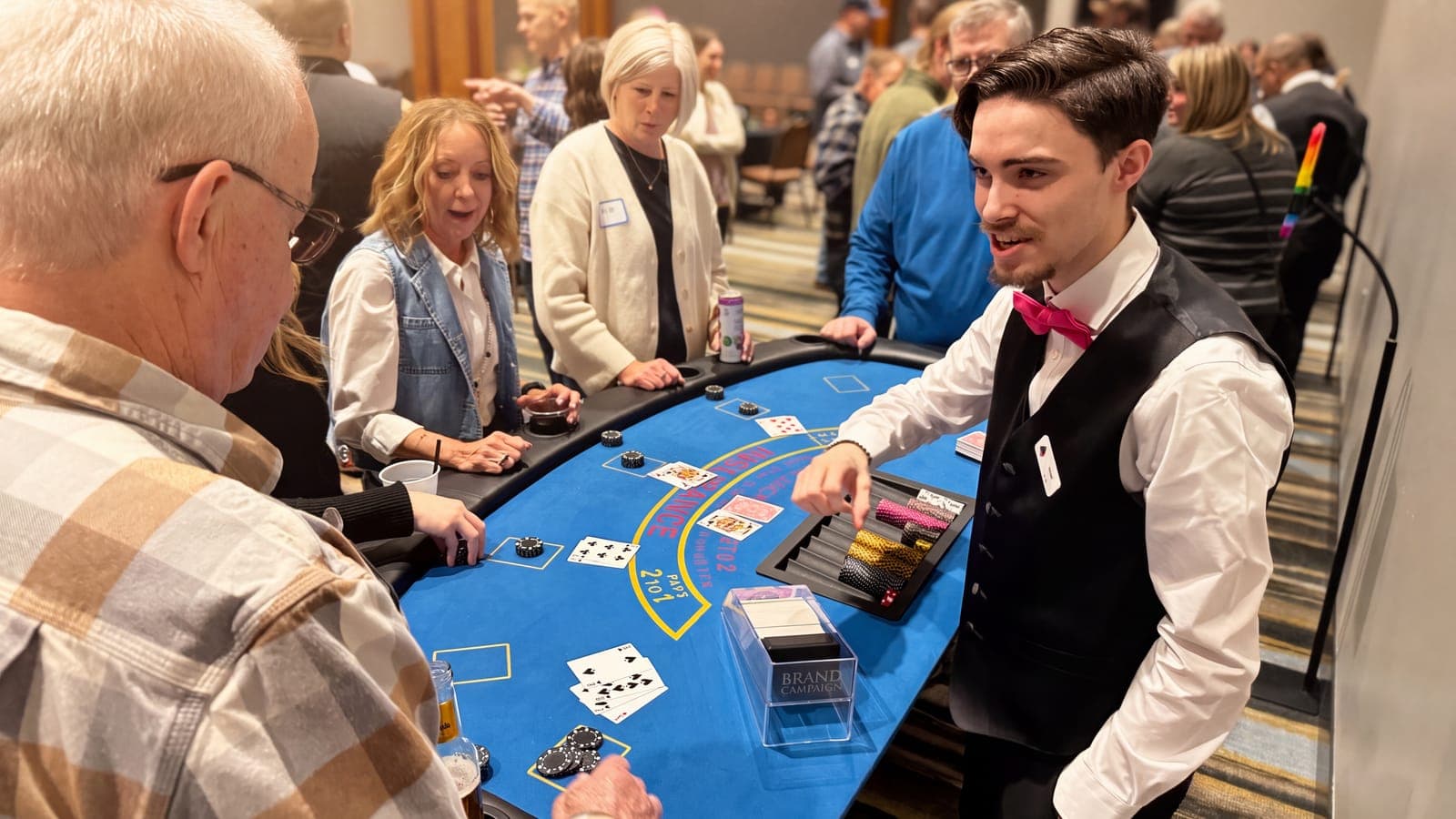
A blackjack table or the Human Slot Machine gives guests something to do between dinner, speeches and the silent auction. People crowd around, cheer each other on and stay longer, and a room full of happy guests is a room that gives. The games themselves are the draw. The fundraising usually happens around them.
The rule that trips people up: prize + chance + payment
In the US, a game that combines three things is generally treated as gambling and is heavily regulated:
- A prize — something of value for winning
- Chance — the outcome depends on luck
- Payment — guests give money (or something of value) to play
Casino-party games always involve some chance, and most hosts want prizes. So the most common way events stay on the right side of the line is to make sure guests never pay to play. In practice, that usually means:
- No selling spins, chips, buy-ins, extra hands or extra rounds.
- No selling raffle tickets or prize entries through the games. A spin or a hand that earns more entries is still a chance at a prize.
- “Prize” means more than cash. Gift cards, merchandise, gift baskets and extra raffle entries are generally all treated as prizes.
Ways hosts commonly raise money around the games
1. Table and machine sponsors
This is the simplest option and the one we see most. A local business or donor sponsors a blackjack table or the Human Slot Machine. They get signage, a shout-out from the mic and their name in front of every guest who plays. Guests play for free, and the sponsorship money goes to your cause. Sponsors often donate the prizes, too.
2. Let the games carry the rest of the night
Free games keep guests in the room, near the silent auction, the donation stations and the paddle raise. Plenty of hosts keep the games completely free and let them do what they do best: keep the energy up while the real fundraising happens elsewhere.
3. Pay to play, with no prizes
If guests pay to play, the usual approach is to take prizes off the table entirely. Without a prize, there’s generally no gambling. Play is for fun and bragging rights: a spot on the leaderboard, a shout-out from the mic, the cheers of the room.
4. A sweepstakes with a free way to enter
Some hosts offer a paid option alongside a prize drawing by running it as a promotional sweepstakes with an alternate method of entry (AMOE): a genuinely free way to play. You’ve seen the line “No purchase necessary” — this is where it comes from. In a typical setup:
- Same experience. Free players use the same table or the same machine as paying guests.
- Same odds and same prizes. Nobody is sent to a separate, smaller drawing.
- No friction. The free option is right there and just as easy as paying. Nobody gets talked out of it or sent to the back of the line.
- Clear signs and posted rules. “No purchase necessary” appears right next to any price, along with official rules covering who can enter, how to enter for free, the odds, what the prizes are and what they’re worth, who’s running the promotion and when the drawing happens.
This is the format where details matter most. Regulators look hard at setups that work like pay-to-spin slot machines with a token free option, and some states — Minnesota among them — have specific written-disclosure rules for promotions like this. If you’re considering a sweepstakes, have your attorney set it up.
What we handle, and what you handle
We bring the entertainment. Dealers and tables, the Human Slot Machine and its crew, the equipment and the leaderboard.
We charge a flat entertainment fee. It doesn’t change with how much your event raises, and we never take a share of it.
You run the fundraising. Any money collected, sponsorships, prizes, raffle tickets, entries, signage, official rules and permits are the host’s. Our staff run the games; they don’t sell entries, collect donations or handle raffle tickets.
Questions hosts typically take to their attorney
- Will any guest pay anything — directly, or through an event ticket — to play?
- Are there prizes? What are they, and what are they worth?
- Who is providing the prizes, and who is the sponsor?
- If there’s a paid option, is there an equally easy free one, with rules posted?
- Is a licensed raffle happening at the same event?
Planning a fundraiser?
We’ve helped schools, nonprofits and community groups put on fundraisers people talk about for years. Tell us about your event and we’ll help you pick the right setup — blackjack tournaments, the Human Slot Machine, or both.